What Is a Marketing Operating System And Why Campaigns Alone Stop Scaling

Introduction
A marketing operating system is the structure that governs how marketing demand is created, captured, measured, and improved over time. It defines how inputs such as traffic and attention move through repeatable processes to produce predictable outputs such as pipeline and revenue.
This matters because many businesses experience a widening gap between marketing activity and marketing results. Campaign volume increases, tools multiply, and teams remain busy, yet outcomes feel inconsistent and difficult to forecast.
This article explains what a marketing operating system is, why marketing performance becomes unstable without one, and how to decide whether continuing to rely on campaigns and tactics is sufficient or whether a system-level approach is required for scalable growth.
Direct Answer: What Is a Marketing Operating System?

A marketing operating system is the underlying framework that enables marketing to function as a continuous, repeatable process rather than a series of isolated campaigns. It connects strategy, execution, measurement, and learning into a single structure.
Its purpose is not to increase activity or improve individual campaigns. Its purpose is to improve predictability. By retaining learning and standardizing decision-making, a marketing operating system reduces volatility and allows performance to improve over time instead of resetting with each new initiative.
Without an operating system, results depend heavily on constant execution. With one, results depend on structure.
Why Marketing Breaks Without an Operating System
Marketing rarely underperforms because of a lack of effort or creativity. It breaks because effort is not organized into a durable structure.
When marketing operates without an operating system, activities exist as disconnected initiatives. Each campaign is planned, launched, evaluated, and replaced. Learning is short-lived and localized. Performance gains disappear when attention shifts.
As complexity increases, this creates instability. More channels introduce more variables. More campaigns increase noise. Decisions become reactive because there is no consistent baseline for evaluation.
The result is a common pattern: marketing feels busy but ineffective. Output grows, but confidence declines. The problem is not execution quality, but the absence of a system that links actions to outcomes consistently.
Marketing Operating System vs Campaign-Based Marketing

Campaign-based marketing treats growth as a sequence of projects. Each campaign has a defined start and end, short-term goals, and isolated performance metrics. This approach can work in early stages, when simplicity and speed are more important than predictability.
A marketing operating system treats growth as an ongoing process. Campaigns still exist, but they operate within a larger structure. Their performance is evaluated in relation to the system rather than in isolation.
The difference appears in learning and scale. Campaign-based marketing optimizes locally. A marketing operating system optimizes globally. One depends on repeated effort. The other depends on retained learning.
Over time, this distinction determines whether growth plateaus or compounds.
What a Marketing Operating System Includes

A marketing operating system is defined by how inputs, processes, and outputs are connected.
Inputs include traffic, attention, demand signals, and market feedback. These inputs have limited value unless they move through structured processes.
Processes include funnel architecture, conversion optimization, lifecycle communication, and measurement logic. These processes determine whether attention becomes demand, whether demand becomes pipeline, and whether insight is preserved.
Outputs include qualified pipeline, revenue contribution, and decision insight. Insight is critical because it enables improvement. Without it, optimization relies on assumption rather than evidence.
The system ensures that outputs inform the next cycle of decisions.
Why Campaigns Alone Stop Scaling
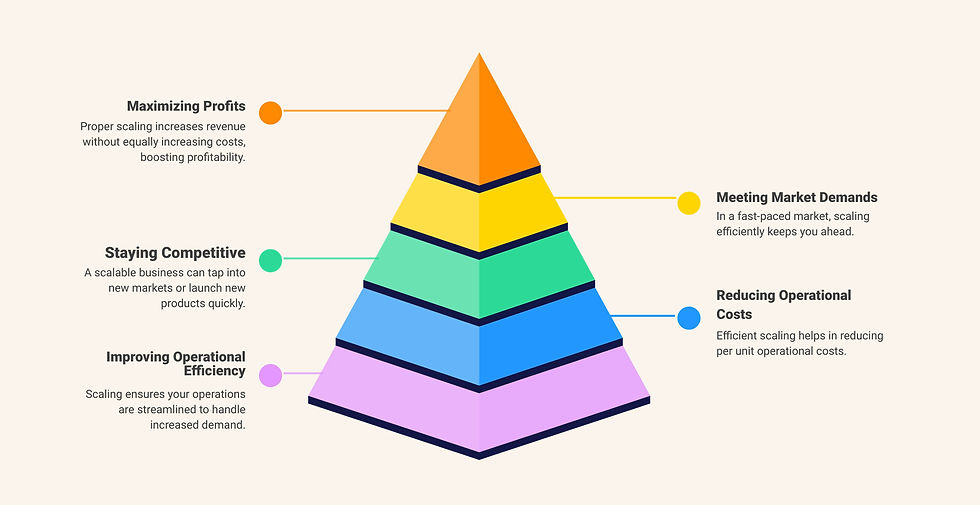
Campaigns stop scaling because they are designed to perform independently.
As audiences saturate, performance declines. Teams respond by increasing volume, expanding channels, or refreshing creative. These actions may produce temporary lifts, but they reset learning each time.
Campaigns also rely on constant execution. When effort slows, results drop. There is little structural memory to sustain performance.
A marketing operating system addresses this limitation by preserving what works. Instead of starting from zero with each initiative, performance builds on prior learning. Scaling becomes a function of system strength rather than campaign frequency.
Marketing as an Operating Model, Not an Activity Set

Viewing marketing as an operating model shifts focus from outputs to flow.
Traffic becomes a signal rather than a goal. Leads become an outcome rather than a target. Measurement becomes feedback rather than reporting.
In this model, marketing improves through iteration rather than reinvention. Changes are evaluated within the system, making cause and effect clearer. Over time, this reduces risk and improves forecastability.
Systems compound because learning accumulates. Activities do not.
When a Business Needs a Marketing Operating System
A marketing operating system becomes necessary when complexity grows faster than clarity.
This often occurs as deal sizes increase, sales cycles lengthen, or channel mix expands. At this stage, mistakes become more expensive and harder to reverse. Decisions based on incomplete signals carry higher risk.
If performance feels inconsistent, difficult to explain, or overly dependent on specific campaigns or individuals, structure may not be keeping pace with growth.
The need for an operating system is driven by decision risk, not company size.
What a Marketing Operating System Can and Cannot Do
A marketing operating system can improve predictability, reduce volatility, and support better decisions. It can align teams around shared metrics and create a stable foundation for growth.
It cannot eliminate uncertainty. Markets change, buyer behavior evolves, and external factors remain uncontrollable. A system does not guarantee results. It improves the quality of decisions under uncertainty.
Expecting certainty from structure leads to disappointment. Using structure to manage risk leads to progress.
How Blue Marketing Office Approaches This
Blue Marketing Office approaches marketing as an operating system rather than a collection of isolated services. The focus is on aligning structure with buyer behavior and business growth.
This involves defining repeatable processes, establishing measurement that supports decisions, and ensuring campaigns operate within a coherent system. The objective is not to replace execution, but to make execution more durable and less volatile.
Common Questions
What is a marketing operating system? A marketing operating system is the framework that connects marketing inputs, processes, and outputs into a repeatable structure that supports predictable growth.
How is a marketing operating system different from marketing strategy? Strategy defines direction and priorities. A marketing operating system defines how that strategy is executed, measured, and improved over time.
Do small businesses need a marketing operating system? Not always. Simple structures may be sufficient early on. As complexity and decision risk increase, structure becomes more important regardless of company size.
Does a marketing operating system replace campaigns? No. Campaigns operate within the system. The system ensures campaigns contribute to long-term performance rather than short-term spikes.
How long does it take to build a marketing operating system? It develops progressively through iteration. The objective is alignment over time, not immediate completeness.
What This Means for Your Business
If growth depends on constant activity and results feel fragile, campaigns alone may no longer be sufficient. Investing in structure can reduce volatility and improve confidence in decisions.
The choice is not between creativity and systems. It is between reactive growth and designed growth.
Conclusion
A marketing operating system exists to turn effort into predictable outcomes. Without it, marketing depends on momentum and repetition. With it, marketing becomes a compounding function of learning and structure.
Understanding whether your current approach is activity-driven or system-driven clarifies what needs to change. That clarity supports better decisions without unnecessary complexity.


