Marketing Throughput Explained: Why Teams Get Busier but Results Stay Flat

Introduction
Marketing throughput is the rate at which marketing work moves from initiation to measurable business impact. It describes how effectively a marketing system converts effort into outcomes over time, regardless of how busy the team appears. A team can increase activity while throughput remains unchanged or declines.
This matters because many organizations respond to stalled performance by adding work rather than improving flow. More campaigns, content, and coordination often increase delays instead of results.
This article helps decision-makers determine whether a marketing slowdown is caused by insufficient capacity or by low marketing throughput driven by system bottlenecks—and how that distinction should guide structural and investment decisions.
What Is Marketing Throughput?

Marketing throughput is the amount of valuable marketing output delivered per unit of time.
It measures flow, not effort.
Throughput reflects how quickly work progresses from idea to execution to observable impact. It captures delays, dependencies, rework, and waiting time that activity-based metrics ignore.
Marketing throughput measures:
Time from start to impact
Volume of completed, usable output
Reliability and consistency of delivery
Marketing throughput does not measure:
Individual productivity
Number of tasks started
Team busyness
High-throughput systems finish fewer initiatives faster and more reliably. Low-throughput systems start many initiatives but complete few that meaningfully affect performance.
Why More Marketing Activity Often Reduces Results

Adding activity can reduce results when it exceeds the system’s ability to move work through to completion.
As more initiatives are introduced, work accumulates in queues. Dependencies increase, handoffs multiply, and decision cycles lengthen. Each additional project competes for shared attention and resources, slowing progress across all work.
The effect compounds over time. Cycle time increases, feedback arrives later, and teams lose the ability to learn quickly. Even strong ideas underperform because they are delayed or diluted.
The implication is structural: beyond a certain point, more work lowers throughput. The system appears productive while output quality and speed decline.
Marketing Throughput vs Marketing Productivity
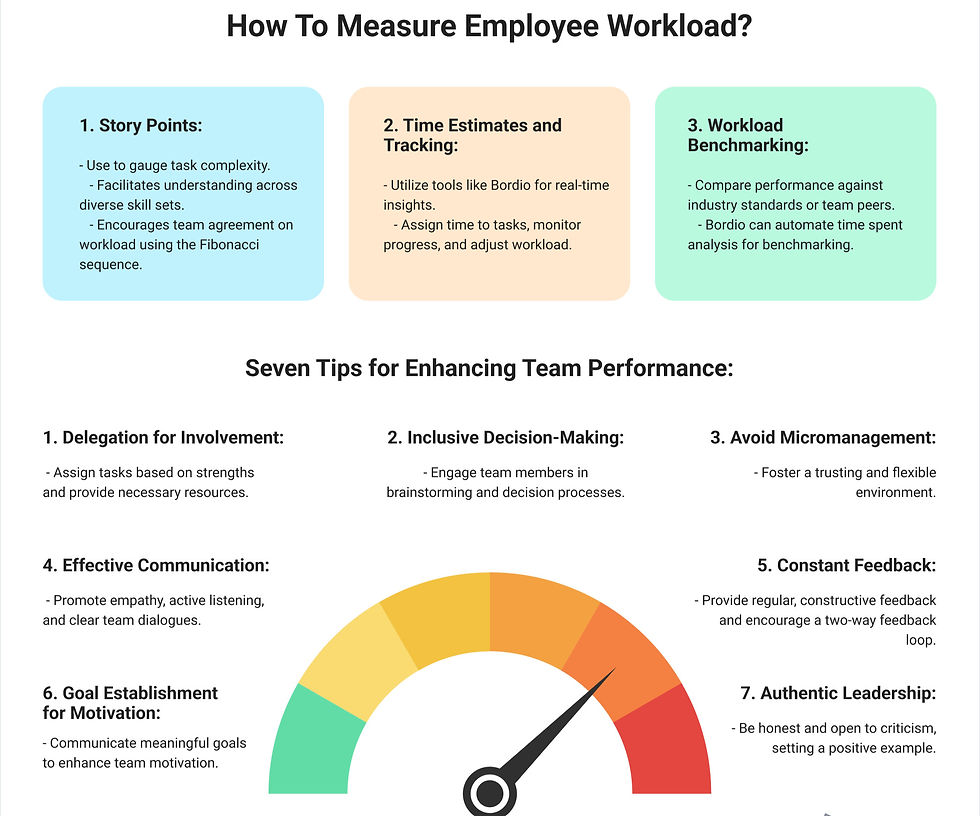
Marketing throughput is often confused with productivity.
Productivity focuses on how much work individuals or teams complete. Throughput focuses on how fast valuable outcomes emerge from the system as a whole.
Productivity metrics can improve while throughput declines. Teams may complete more tasks or produce more assets, yet overall impact slows because work is fragmented, delayed, or repeatedly revised.
Throughput accounts for coordination, sequencing, and constraints. Productivity measures effort; throughput measures results over time. Optimizing productivity alone often shifts inefficiency elsewhere in the system.
The Real Problem: Why This Persists
Throughput problems persist because they are difficult to observe.
Most reporting emphasizes utilization and output volume. Teams track how much work is started and how busy people are. These signals obscure flow constraints.
At small scales, informal coordination compensates for weak systems. As organizations grow, complexity increases. Approval layers expand, cross-team dependencies multiply, and tools fragment work across environments.
Surface-level fixes fail because they address symptoms rather than constraints. Hiring increases coordination cost. Adding tools increases handoffs. Urgency increases rework. None of these improve throughput if bottlenecks remain unchanged.
Where Throughput Breaks at Scale
Throughput typically degrades at predictable points.
Approval layers extend cycle time by introducing waiting periods that compound across initiatives.
Cross-team dependencies create synchronization delays when inputs are required from teams with competing priorities.
Tool fragmentation disperses context, increasing misalignment and rework.
These factors do not reduce activity. They reduce flow. Over time, the system completes fewer initiatives per unit of time despite higher effort.
Why Hiring More People Doesn’t Fix Throughput Problems

Low throughput is often misdiagnosed as a capacity issue.
Adding people increases output only when labor is the primary constraint. When the constraint is coordination, decision latency, or process design, additional people increase complexity and slow flow.
Each new role adds communication paths and dependencies. Without system changes, throughput remains constrained while overhead grows.
Throughput improves by removing constraints, not by adding capacity.
Strategic Framework: Marketing Throughput as a System
Marketing throughput spans the full growth system.
TrafficThroughput determines how quickly acquisition initiatives reach measurable impact.
Funnel and conversionThroughput affects how fast conversion insights lead to implemented changes.
CRM and lifecycleThroughput influences the speed at which retention and reactivation initiatives are tested and refined.
AnalyticsAnalytics supports throughput by shortening feedback loops and clarifying constraints.
Automation and AIAutomation reduces manual delays. AI supports prioritization and signal interpretation. Neither resolves structural bottlenecks without system redesign.
Aligned systems shorten cycle time and accelerate learning.
What Actually Drives Results
Throughput improves when systems are designed around flow rather than volume.
Clear prioritization limits work in progress. Defined ownership reduces waiting. Fewer handoffs reduce rework. Shorter feedback loops increase learning speed.
The principle is consistent: results improve when constraints are addressed directly, not when activity increases.
How Growth Systems Are Designed for Higher Throughput
The process begins by identifying where flow slows rather than optimizing isolated tasks. Bottlenecks are diagnosed at the system level.
Marketing systems are then structured to reduce unnecessary handoffs, clarify decision ownership, and align work with measurable impact. The objective is predictable delivery and faster learning, not maximum activity.
Common Questions
What is marketing throughput?Marketing throughput is the rate at which marketing work turns into measurable business impact over time.
Why is our marketing team busy but ineffective?High activity with low throughput usually indicates system bottlenecks rather than lack of effort.
Is marketing throughput the same as productivity?No. Productivity measures output per person; throughput measures results per unit of time across the system.
Does hiring more marketers increase throughput?Only if labor is the constraint. Otherwise, it can reduce throughput by increasing coordination costs.
How do bottlenecks affect marketing results?Bottlenecks increase cycle time, delay feedback, and reduce learning speed, limiting impact.
What This Means for Your Business
If marketing feels overloaded while results remain flat, throughput is likely constrained. Leaders must decide whether to add capacity or redesign systems to improve flow. Sustainable improvement comes from removing constraints rather than increasing activity.
Conclusion
Marketing slowdowns are often attributed to effort or talent. In many cases, the true constraint is throughput.
Before increasing workload or headcount, it is useful to examine how work moves through the system and where it stalls. That assessment clarifies whether progress depends on more capacity or on removing bottlenecks that limit flow.


