Marketing Signal vs Noise: Why Your Data Isn’t Helping You Make Better Decisions
- Jan 23
- 5 min read

Introduction
Marketing signal is data that reliably improves decision quality over time, while marketing noise is data that creates activity without improving outcomes. The difference is not how much data you have, how granular it is, or how quickly it updates. The difference is whether information consistently reduces uncertainty and leads to better choices.
This matters because many organizations now operate with abundant data yet declining clarity. Dashboards expand, metrics multiply, and reporting improves, but performance plateaus and confidence in decisions erodes.
This article helps decision-makers determine whether their marketing decisions are constrained by a lack of data or by an inability to separate signal from noise and what that implies for how their marketing system should be designed.
What Is Signal and What Is Noise in Marketing?

Marketing signal is information that consistently reveals cause-and-effect relationships and improves decisions across time and context. Signal helps answer which actions drive outcomes, which patterns repeat, and what should change next.
Marketing noise is information that appears meaningful but does not reliably improve decisions. Noise fluctuates, contradicts itself, or drives frequent reversals without sustained improvement.
Signal differs from noise in three ways:
Signal is stable across time, not limited to short-term spikes.
Signal connects actions to outcomes, not metrics to metrics.
Signal increases decision confidence, not reporting volume.
Signal is not:
High-frequency data
Granular reporting
Real-time dashboards
A marketing system can generate large amounts of data and still be signal-poor.
Why More Data Often Reduces Clarity
More data reduces clarity when it accumulates faster than it can be interpreted and acted upon.
As organizations add channels, tools, and experiments, metrics proliferate. Indicators move in different directions, short-term fluctuations dominate attention, and teams respond to what is visible rather than what is meaningful.
The cause is accumulation without synthesis. Data enters the system faster than insight emerges. Decision-makers receive conflicting inputs, forcing reliance on intuition or hierarchy rather than evidence.
The effect is hesitation or overreaction. Decisions are delayed, reversed, or constantly adjusted. Learning slows because the system cannot distinguish meaningful patterns from random variation.
The implication is structural: beyond a certain point, additional measurement increases uncertainty rather than reducing it.
The Real Problem: Why This Persists
Signal-to-noise problems persist because most marketing systems are optimized for reporting, not learning.
At small scale, intuition and proximity compensate for limited data. As scale increases, metrics replace direct understanding. Numbers become proxies for insight, even when they are incomplete or misaligned with decisions.
What typically breaks is interpretation. Attribution delays distort cause and effect. Leading and lagging indicators are mixed without context. Local teams optimize their own metrics without regard to system-level outcomes.
Surface-level fixes fail because they focus on tooling. New dashboards improve visibility without improving judgment. More advanced analytics add complexity without clarifying priorities.
Without a system designed to convert data into learning, noise dominates.
How Noise Enters Marketing Systems
Over-measurement
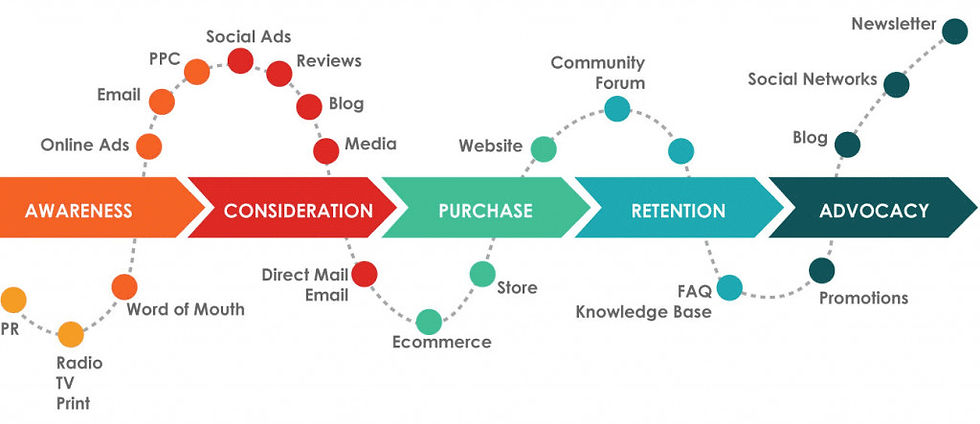
When everything is measured, nothing is prioritized. Teams track what is easy to collect rather than what informs decisions. Attention fragments across indicators with unclear decision relevance.
Attribution delays
Marketing effects often unfold over time. Systems that expect immediate causality misclassify long-term signal as short-term noise and optimize prematurely.
Local optimization
Teams optimize channel-level metrics rather than system-level outcomes. Local improvements create conflicting interpretations while overall effectiveness stagnates.
Noise accumulates not because data is wrong, but because it is disconnected from decisions.
The Cost of Acting on Noise
Acting on noise creates false confidence. Decisions feel data-driven but rest on unstable inputs.
Budgets shift toward short-term fluctuations. Strategies change frequently without compounding improvement. Trust in metrics declines as results fail to materialize.
Learning slows because actions are not consistently evaluated against outcomes. When every result can be justified by a different metric, nothing is conclusively learned.
The long-term cost is strategic drift: activity continues while direction weakens.
How Signal Actually Emerges Over Time

Signal does not appear in a single report. It emerges through consistency and repetition.
Patterns that persist across time, campaigns, and conditions are more likely to reflect causality. Signals strengthen when similar inputs produce similar outcomes in different contexts.
Time-based validation matters. Signal becomes clearer when decisions are evaluated over appropriate horizons rather than judged on immediate results.
Most importantly, signal emerges when data is collected to answer explicit decisions. When metrics exist to resolve defined questions, interpretation improves and noise recedes.
How to Tell If Your Marketing System Is Signal-Starved
Several indicators point to a signal problem rather than a data problem.
Frequent decision reversals suggest unstable interpretation. High metric volatility without corresponding strategy change indicates noise-driven attention. Low confidence in decisions despite abundant data signals weak extraction of meaning.
When teams debate which metric matters instead of what to do next, the system is producing noise.
Strategic Framework: Signal Across the Marketing System

Signal and noise affect every layer of marketing.
Traffic Signal distinguishes durable demand trends from channel volatility.
Funnel and conversion Signal separates meaningful conversion improvements from random variation.
CRM and lifecycle Signal identifies behaviors that predict retention rather than short-term engagement spikes.
Analytics Analytics should reduce decision uncertainty, not increase it.
Automation and AI Automation accelerates execution. AI accelerates analysis. Neither improves signal without clear decision logic.
A coherent system aligns data collection with decision needs across all layers.
What Actually Drives Results
Results improve when marketing systems are designed to amplify signal.
Clear decision questions guide what data is collected. Fewer, more meaningful metrics replace broad measurement. Time horizons align with real impact cycles.
The governing principle is consistent: signal improves when data is gathered to inform decisions, not to justify activity.
How Blue Marketing Office Approaches Signal vs Noise
The approach begins by identifying which decisions matter most and where uncertainty is highest.
Data is evaluated by whether it reduces that uncertainty over time. Metrics that do not inform decisions are deprioritized, regardless of availability.
Marketing systems are structured to favor learning velocity and decision confidence rather than reporting volume. The objective is reliable insight, not more insight.
Common Questions
What is marketing signal vs noise?Marketing signal is data that consistently improves decision quality; marketing noise is data that does not.
Why do we have data but no clarity?Because data is collected without a clear link to decisions.
Why do metrics contradict each other?Because metrics reflect different time horizons and levels of causality.
Do we need better analytics or better interpretation?In most cases, interpretation and decision framing are the constraint.
How do we know which metrics matter?Metrics matter when they consistently inform better decisions over time.
What This Means for Your Business
When performance plateaus, leaders face a choice. They can invest in more data and tooling, or redesign their system to extract clearer signal from what already exists. Only the latter improves decision quality without increasing complexity.
Conclusion
Marketing systems rarely suffer from a lack of data. They suffer from an excess of noise.
Before adding new metrics, tools, or reports, it is useful to examine which information consistently improves decisions and which does not. That assessment clarifies whether growth is constrained by information gaps or by the inability to separate signal from noise.


